7 Foods You Should Eat Every Day To Kill Your Visceral Fat
Dec 02, 2025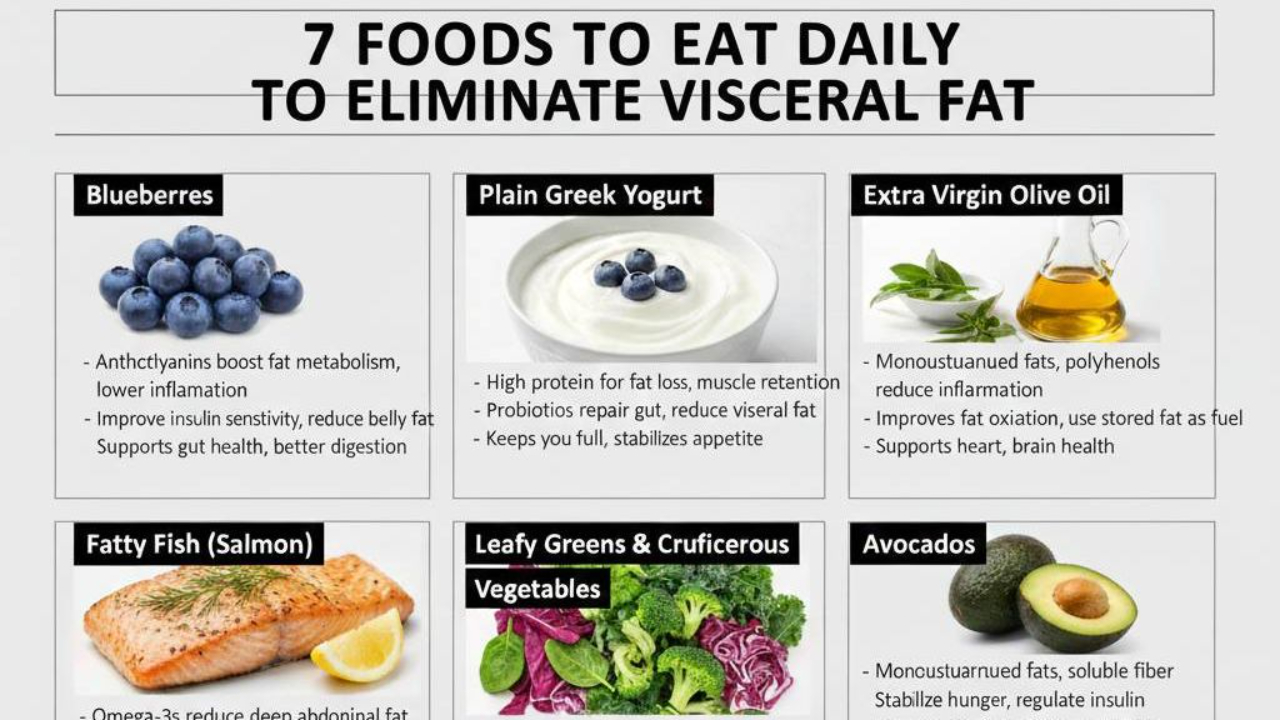
Read time: 3.8 minutes
The High Performance Journal - December 2nd, 2025
Visceral fat is the most dangerous type of fat around your body. It wraps around your organs. It messes with your hormones. It wrecks your metabolism, and it literally makes you dumber by reducing blood flow to the brain.
The good news is that you can target visceral fat not just with workouts and steps, but with specific foods that can change your biology from the inside out.
After coaching thousands of high performers over the past 20 years, I found that seven foods help eliminate visceral fat naturally and permanently.
These are the same foods I have given to CEOs, entrepreneurs, executives, and parents who want to get lean without complexity. These are also the same foods I eat to keep my body at near-zero levels of visceral fat:
These changes started with the foods you are about to read about.
So if you are ready to remove visceral fat once and for all, let's go 🔥
7 Foods You Should Eat Every Day To Kill Your Visceral Fat
#1 - Blueberries
Blueberries are the smallest fruit with the biggest impact. They are packed with anthocyanins, powerful plant chemicals that switch on fat metabolism and shut down inflammation.
Clinical studies show they improve insulin sensitivity and reduce belly fat even without major diet changes.
They also support the gut, which plays a major role in how your body stores fat and how well your metabolism works. A healthier gut equals better digestion, clearer thinking, and more stable energy.
What I do: I throw blueberries into my breakfast every morning. Usually, they go right into my Greek yogurt, which brings me to the next food.
#2 - Plain Greek Yogurt
Greek yogurt pulls double duty. It gives you high protein to support fat loss and muscle retention, and it gives you probiotics that repair your gut.
When your gut heals, everything improves, including how much fat you store around your organs.
People who eat more dairy, especially fermented dairy, tend to have lower visceral fat levels and smaller waists. It keeps you full, stabilizes your appetite, and makes fat loss easier without thinking about it.
How I use it: Daily. Zero percent fat Greek yogurt with berries, protein powder, and a hint of cinnamon for breakfast or lunch.
#3 Extra Virgin Olive Oil
Extra virgin olive oil is one of the best fat-loss foods on the planet. It is rich in monounsaturated fats and polyphenols that reduce inflammation and improve fat oxidation.
One study found that simply swapping in olive oil for other oils led to more fat loss, especially around the belly.
EVOO helps your body use stored fat as fuel and supports your heart, blood vessels, and brain. It tastes great, goes on almost everything, and is one of the simplest upgrades you can make.
How I use it: On greens, eggs, salmon...you name it. It's my go-to oil to cook my food with.
#4 - Fatty Fish
Salmon. Sardines. Mackerel. These foods are visceral fat killers. Omega-3 fatty acids reduce deep abdominal fat, improve insulin sensitivity, and lower inflammation at the cellular level.
Think of fatty fish as anti-inflammatory medicine that happens to taste amazing. For many clients, switching to salmon twice per week produces noticeable changes in their waistline within weeks.
What I do: Salmon at least twice a week. Sardines are a quick, high-protein snack.
#5 - Leafy Greens and Cruciferous Vegetables
Spinach, kale, broccoli, cabbage, bok choy. These foods give you the best metabolic ROI of the vegetable world.
They are loaded with fiber, antioxidants, and phytochemicals that fight inflammation, improve gut health, and support blood sugar control.
The real power of greens is volume. They let you eat more food while staying in a calorie deficit. When you combine fiber with antioxidants, cravings drop, energy rises, and waistlines shrink.
What I do: Two servings a day. I use it to volumize my food. Nothing fancy. Just consistent.
#6 - Avocados
Avocados are creamy, satisfying, and shockingly effective at reducing visceral fat.
They are rich in monounsaturated fats and soluble fiber, a powerful duo for stabilizing hunger and regulating insulin.
People who eat avocados regularly tend to have lower belly fat even when they eat the same number of calories as everyone else. They crowd out junk foods, help you feel full longer, and support sharper thinking.
My go-to: I eat these every other day. I'm not a big fan (unless they're in guacamole), but I still have them as part of my diet.
#7 - Green Tea
While green tea is a drink, I had to include it in the list.
Green tea is a visceral fat killer in a mug. It contains EGCG, a catechin shown to increase fat oxidation and target visceral fat specifically.
Drink two to three cups a day, and you can see measurable improvements within twelve weeks.
It gives you clean energy without the crash and supports your metabolism, digestion, and brain.
My protocol: After I'm done with my first cup of coffee, I reach for the green tea. This gives me a healthy caffeine boost. Just make sure to drink it at least 10 hours before sleep.
How To Put This Together
When you combine these foods in a daily routine, something interesting happens. People following diets rich in these foods see about a fourteen percent reduction in visceral fat in controlled studies, nearly double other “healthy” diets.
Pair these foods with a time-restricted eating schedule, and the results amplify. Metabolism improves, inflammation drops, and the body prioritizes stored fat for fuel.
Here is a simple daily structure using the seven foods:
Breakfast:
- Greek yogurt with blueberries and protein powder.
Lunch:
- Mixed leafy greens
- Extra virgin olive oil and lemon
- A small portion of rice or quinoa
- Protein source in the form of salmon
Dinner:
- Steak or chicken
- Cruciferous vegetables sautéed in garlic and olive oil
- Chickpeas or lentils
- Optional half avocado
This is nutrient-dense eating. High protein, high fiber, healthy fats, and powerful antioxidants. This is how you set up a diet to kill visceral fat.
What You Will Notice When You Eat This Way
When you shift from hyper-processed foods to these foods, you'll notice your taste buds begin to change.
Something you might not know is that they regenerate every two weeks, and within a month, these foods will taste better than the junk you used to crave.
You'll see your cravings start to fade, your energy start to go up, and your digestion improve.
With clients, we usually see that within the first week, people will lose 2-5 pounds from reduced inflammation and water retention. But the real magic is by day 90, where the difference is obvious.
Your visceral fat drops to healthy levels. Your body runs cleaner and sharper.
And the person you see in the mirror finally matches the person you have been trying to become.
Onward and upward. 🚀
- Dan
When you're ready, here are 2 ways I can help:
1. The Lean Body 90 System: When you’re ready to get in great shape, Lean Body 90 is the obvious choice. You can get in great shape and reach your fitness goals in just 90 minutes a week. Lose weight and build muscle even without hours in the gym or highly restrictive diets. Join 1000+ students here.
2. Are you an entrepreneur who wants to get lean, boost energy, and get in your best shape? Apply for private one-on-one coaching here.
References
Blueberry Intake Alters Abdominal Fat and PPAR Activity Seymour EM, Lewis SK, Urcuyo-Llanes DE, et al. Blueberry intake alters skeletal muscle and adipose tissue peroxisome proliferator–activated receptor activity and reduces insulin resistance in obese rats. J Med Food. 2011 Jan-Feb;14(1-2):151-8. doi: 10.1089/jmf.2010.0292. PMID: 21244276.
Clinical Blueberry Intake and Insulin Sensitivity Stull AJ, Cash KC, Johnson WD, et al. Bioactives in blueberries improve insulin sensitivity in obese, insulin‑resistant men and women. J Nutr. 2010 Oct;140(10):1764-8. doi: 10.3945/jn.110.125336. PMID: 20724487.
Anthocyanin/Blueberry Intake, Central Adiposity Jennings A, Welch AA, Spector T, et al. Higher anthocyanin intake is associated with lower abdominal adiposity and improved insulin resistance in women. Am J Clin Nutr. 2014;100(3):712‑721. doi: 10.3945/ajcn.113.079533. PMID: 24965308.
Fermented Milk and Visceral Fat Reduction Kadooka Y, Sato M, Ogawa A, et al. Effect of Lactobacillus gasseri SBT2055 in fermented milk on abdominal adiposity in adults with tendency toward obesity: a randomized controlled trial. Eur J Clin Nutr. 2010 Jun;64(6):636‑643. doi: 10.1038/ejcn.2010.19. PMID: 20216555.
Low‑Fat Dairy and Visceral/Subcutaneous Fat Ratio Trichia E, Luben R, Khaw KT, et al. Associations of types of dairy consumption with adiposity: cross‑sectional findings from the EPIC‑Norfolk study. Public Health Nutr. 2019;22(7):1267‑1278. doi: 10.1017/S1368980018003500. PMID: 30286682.
Yogurt Intake, Waist and Body Fat Trajectories Martínez-González MA, Sayón-Orea C, Ruiz-Canela M, et al. Yogurt consumption, weight change and risk of overweight/obesity: the SUN cohort study. Nutr Hosp. 2014;29(3):509‑515. doi: 10.3305/nh.2014.29.3.7119. PMID: 24679039.
Mediterranean Pattern with EVOO and Central Obesity Estruch R, Ros E, Salas‑Salvadó J, et al. Primary prevention of cardiovascular disease with a Mediterranean diet. N Engl J Med. 2013 Apr 4;368(14):1279‑1290. doi: 10.1056/NEJMoa1200303. PMID: 23432189. (PREDIMED included an EVOO arm and reported favorable changes in waist circumference and central obesity markers as part of the Med Diet pattern).
Olive Oil and Abdominal Fat Distribution George ES, Marshall S, Mayr HL, et al. Extra virgin olive oil improves some anthropometric and metabolic parameters in overweight and obese participants: a pilot study. Int J Food Sci Nutr. 2019;70(2):143‑154. doi: 10.1080/09637486.2018.1482535. PMID: 29852725. (Reported decreases in the visceral‑to‑subcutaneous abdominal fat thickness ratio on ultrasound).
Fish Intake and Visceral Obesity Mekary RA, Ascherio A, Manson JE, et al. Fish consumption, long‑chain omega‑3 fatty acids, and risk of type 2 diabetes: a systematic review and meta‑analysis. Am J Clin Nutr. 2014 Nov;100(5):1422‑1433. doi: 10.3945/ajcn.113.076359. PMID: 25240073. (Several included cohorts report relationships between fish intake, waist circumference and central adiposity phenotypes).
Omega‑3 Supplementation and Abdominal Fat Thorsdottir I, Tomasson H, Gunnarsdottir I, et al. Randomized trial of weight‑loss diets for young adults varying in fish and fish oil content. Int J Obes (Lond). 2007 Oct;31(10):1560‑1566. doi: 10.1038/sj.ijo.0803643. PMID: 17579585. (Showed greater reduction in body fat and waist with fish/fish‑oil enriched diets during hypocaloric intervention).
Vegetable Intake and Visceral Fat–Linked Phenotypes Blekkenhorst LC, Sim M, Bondonno NP, et al. Cruciferous and total vegetable intakes are inversely associated with subclinical atherosclerosis in older adult women. J Am Heart Assoc. 2018 Apr 3;7(8):e008391. doi: 10.1161/JAHA.117.008391. PMID: 29622529. (Used abdominal aortic calcification and vascular markers closely tied to visceral adiposity and metabolic risk; cruciferous vegetable intake inversely associated with these outcomes).
Leafy Vegetables and Cardiometabolic Risk Johnson M, Pace RD, Sweetpotato greens, collards, and purslane reduce cardiometabolic risk markers in rats fed a diet with high omega‑6:omega‑3 ratio. Nutrients. 2019 Jan 30;11(2):271. doi: 10.3390/nu11020271. PMID: 30708977. (Demonstrated reductions in cholesterol and blood pressure, helping you link greens to improved cardiometabolic milieu even if not directly imaging VAT).
Avocado Intake and Abdominal Adiposity Fulgoni VL 3rd, Dreher ML, Davenport AJ. Avocado consumption is associated with better diet quality and nutrient intake, and lower metabolic syndrome risk in US adults. Nutr J. 2013 Jan 2;12:1. doi: 10.1186/1475-2891-12-1. PMID: 23282226. (Includes data on waist circumference and central obesity as part of MetS cluster).
Avocado Intake, Body Weight and Central Obesity Bes‑Rastrollo M, Wedick NM, Martinez‑Gonzalez MA, et al. Prospective study of avocado consumption and changes in weight and body mass index in men and women. Nutr J. 2014;13:55. doi: 10.1186/1475-2891-13-55. PMID: 24884733. (Higher habitual avocado intake associated with less weight gain and lower risk of becoming overweight/obese over time, with waist measures used in defining adiposity endpoints).
Green Tea Catechins and Visceral Fat Nagao T, Komine Y, Soga S, et al. Ingestion of a tea rich in catechins leads to a reduction in body fat and malondialdehyde‑modified LDL in men. Am J Clin Nutr. 2005 Jan;81(1):122‑129. doi: 10.1093/ajcn/81.1.122. PMID: 15640470. (Visceral fat area by CT decreased significantly in the high‑catechin group).
Catechin‑Enriched Green Tea and Abdominal Fatness Wang H, Wen Y, Du Y, et al. Effects of catechin‑enriched green tea on body composition. Obesity (Silver Spring). 2010 Jun;18(6):1204‑1211. doi: 10.1038/oby.2009.256. PMID: 19680234. (Reported reductions in estimated intra‑abdominal fat area, waist circumference, total fat mass and body weight with high‑catechin green tea).
Green Tea Catechins Beverage and Visceral Fat Area (RCT) Zhang Y, Yu Y, Yuan J, et al. Effects of catechin-enriched green tea beverage on visceral fat loss in obese adults: a randomized double-blind placebo-controlled trial. Nutr Res. 2012;32(6):448‑456. doi: 10.1016/j.nutres.2012.05.003. PMID: 22749199. (CT‑measured visceral fat area significantly reduced in catechin group vs control over 12 weeks).
Disclaimer: This email is provided for educational and informational purposes only and does not constitute providing medical advice or professional services. The information provided should not be used for diagnosing or treating a health problem or disease, and those seeking personal medical advice should consult with a licensed physician.