I'm 46. Here Are 7 Fat Loss Cheat Codes I Wish I Knew At 26
Jun 02, 2026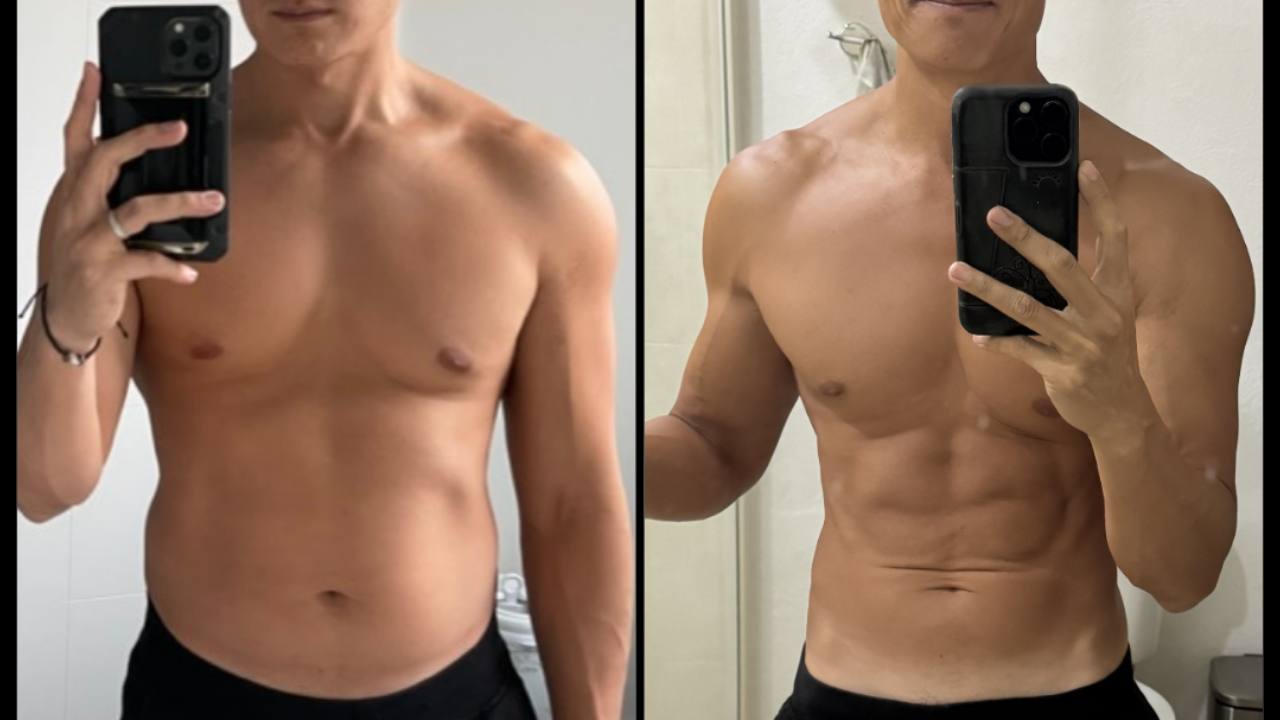
The High Performance Journal Written By Dan Go - June 2nd, 2026
For 20+ years, I've been coaching fat loss.
In year one, my advice was simple: eat less, move more. It worked for some people. For others, it worked some of the time. The clients who stayed stuck weren't lacking information. They lacked nuance and personalization.
Telling someone dealing with weight issues to eat less and move more is like telling someone drowning in debt to spend less and earn more. It's not wrong. It's just not helpful.
Every person has a different body, a different history, and a different bottleneck. Generic advice skips all of that.
After 2 decades of coaching, I've found 7 moves that work for the vast majority of clients regardless of where they're starting. They're specific, and chances are you haven't tried most of them.
Make sure to read to the end. Number 7 is the one everyone needs, and almost no one will actually do.
You ready? Let's go 🔥
I'm 46. Here Are 7 Fat Loss Cheat Codes I Wish I Knew At 26
1. Eat More Protein
Protein is the only macronutrient that builds your body while it burns calories to digest itself.
Your body burns about 20 to 30% of protein calories just processing it before it even enters your bloodstream as energy. Carbohydrates burn about 5 to 10%, and fats burn closer to 3%. That gap adds up over weeks and months without you doing anything extra.
The thermic effect is only part of it. Protein also increases satiety, supports muscle retention during a cut, and may increase spontaneous movement throughout the day. It is the one macronutrient that simultaneously drives fat loss and protects the lean mass underneath.
Recently, Bill Campbell, head of the Physique Enhancement Lab at USF, found that overfeeding protein in resistance-trained people does not cause the fat gain you would expect from the same calorie surplus from carbs or fats. Energy balance still matters, but protein changes that equation.
With clients, we aim for a floor of at least 0.7 grams per pound of body weight and a ceiling of 1 gram.
2. Take 2 Tablespoons of Psyllium Husk Before Meals
I talked about this experiment in this article here.
What I noticed was that between meals I wasn’t thinking about food, and after meals I felt fuller faster and stayed fuller longer. My appetite got quieter.
Psyllium husk is a soluble fiber that forms a gel in your stomach, slowing gastric emptying and stimulating stretch receptors that signal fullness.
It has also been shown to trigger the release of GLP-1, the same satiety pathway that makes medications like Ozempic so effective. As an added bonus, psyllium husk is one of the most well-researched natural compounds for improving your lipid profile.
With clients, we aim for 2 tablespoons mixed with a full glass of water. Make sure you drink it fast before it thickens, and chase it with another glass. You want to make sure you take psyllium husk with a lot of water. Trust me.
3. Drink Soup Before Dinner
I worked with a client whose family was from China. His in-laws lived with them and cooked most of their meals. Traditional Chinese meals are often calorie-dense, heavy on sodium, sauces, and carbs.
We didn't change his food, but we added a broth-based soup before the main meal.
Research shows that drinking a broth-based soup before a meal can reduce total calorie intake by about 20%. The liquid volume and nutrients help stretch the stomach and trigger satiety signals before the main course arrives.
Our client ended up eating less due to feeling more full in the one meal he constantly messed up. This contributed to 20 lbs of fat gone in 16 weeks.
4. Add Resistant Starch To Your Diet
A client looked lean from the outside, but his blood work and DEXA scan told a different story. He had high visceral fat and elevated metabolic markers, and those things do not show up in the mirror.
We built his foundation around sleep, lifting, and daily walking, and we also increased his resistant starch intake.
Research shows that 40g of resistant starch per day can reduce visceral fat faster than many other dietary interventions. The reason is that resistant starch bypasses the intestines and goes straight to the colon, where it feeds good bacteria that produce short-chain fatty acids and improve insulin sensitivity and metabolic signaling.
The best whole food sources are cooked and cooled rice or potatoes, and green bananas. Our client used green banana powder as supplementation was easier and more potent.
5. Turn Dead Time Into Cardio
One of our clients, Chris, averaged about 2,000 to 4,000 steps per day. He was highly sedentary, and this was not only causing him to gain weight, but it was also affecting his brain.
We implemented one simple change: We turned all of his meetings (and time he would normally spend sitting) into walking or even cycling on a stationary bike. Over 16 weeks, he lost 20 lbs, but the best outcomes were not what he expected.
He had less stress after work, which meant less nighttime eating. He had more energy, which meant better food choices. His HbA1c improved because regular walks after meals help blunt post-meal blood sugar spikes. Weight loss was just a side effect
Daily movement doesn't require a gym. Walking meetings, cycling while watching Netflix, a 20-minute walk after dinner. You end up burning calories, reducing stress, and improving blood sugar without thinking about it.
6. Front-Load Your Day With Protein And Fiber
For the past couple of years, I’ve been eating the same breakfast. I wrote about it in this article here. It’s called GLOP:
- 300 g low-fat Greek yogurt
- 1 scoop of whey protein
- 1 tablespoon of psyllium husk
- 100 g frozen fruit
It's delicious and takes only 3 minutes to make.
What I’ve found is that the stronger your first meal is, the better every meal is after it. When I eat a breakfast high in protein, fiber, and micronutrients, my appetite is quieter, I have fewer cravings, and I’m also building muscle right from the first hour of the day.
Research shows that a high-protein, high-fiber breakfast suppresses ghrelin (your hunger hormone) for hours, which means you eat less for the rest of the day without even trying.
7. Find Your Bottleneck And Fix It
This is the one most people skip because it requires honesty.
The Theory Of Constraints states that every system has one bottleneck limiting its output. Fix the bottleneck and the whole system moves. Add capacity everywhere else while the bottleneck remains and nothing changes.
My bottleneck was nighttime eating. I could train well, eat clean all day, do everything right...and quietly undo it between 8 and 10pm.
So I set one rule: no eating after 6pm, weekdays and weekends. No exceptions, no negotiations.
Fat loss became almost automatic after that. Not because I added anything. Because I removed the one thing that was blocking everything else.
Your bottleneck might be weekend alcohol. Afternoon snacking. Skipping breakfast and overeating at night. Identify the single habit that, if eliminated, makes everything else easier. Then put all your energy there.
You are one habit away from making fat loss automatic.
Stop Doing More Things. Start Doing The Right Things.
Most people spend years doing more. More workouts. More restriction. More willpower. And they end up exhausted, not lean.
The people who figure this out stop adding and start finding. They find the lever that moves their specific system, pull it, and everything else follows.
That's what 20 years of coaching has taught me. Fat loss isn't a volume game. It's a precision game. And precision starts with knowing which of these 7 applies most to you right now.
Pick one. Start there.
Onward and upward. 🚀
- Dan
When you're ready, here are 2 ways I can help:
1. The Lean Body 90 System: When you’re ready to get in great shape, Lean Body 90 is the obvious choice. You can get in great shape and reach your fitness goals in just 90 minutes a week. Lose weight and build muscle even without hours in the gym or highly restrictive diets. Join 1000+ students here.
2. Are you an entrepreneur who wants to get lean, boost energy, and get in your best shape? Apply for private one-on-one coaching here.
Disclaimer: This email is provided for educational and informational purposes only and does not constitute providing medical advice or professional services. The information provided should not be used for diagnosing or treating a health problem or disease, and those seeking personal medical advice should consult with a licensed physician.