The Anti-Aging Exercise No One Over 40 Is Doing
Aug 04, 2026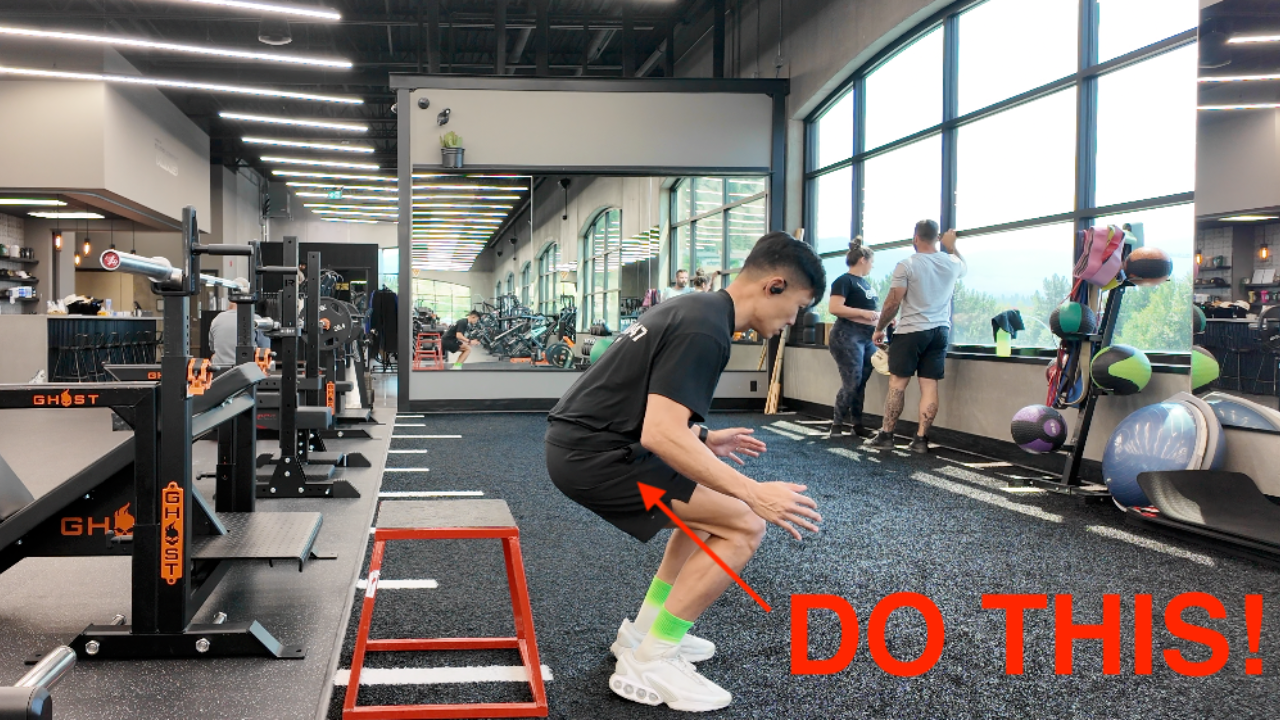
The High Performance Journal Written By Dan Go - August 4, 2026
In the spring, my daughter jumped off a 2-foot wall at the park, and her feet landed gracefully on the cement like a cat.
I went after her, took one look at the jump, felt a tinge of fear, hesitated, jumped, and hit the ground. But when I landed, I felt a slight ache in my knee.
It was then I realized I hadn't jumped for as long as I can remember.
I lift 3x a week, and I'm stronger at 46 than I was at 30. But a 2-foot wall told me something my gym numbers had been hiding:
Strength and athleticism are 2 separate bank accounts, and most of us over 40 only make deposits into one of them.
So in today's newsletter, I want to teach you the number one anti-aging exercise that I don't see anyone doing, and I'll explain why.
We Lose Power 2x Faster Than Strength
Almost everyone knows that as we age, we lose strength. We experience a 1.5% per year if we don't maintain it.
But power is a different story. We lose around 3.5% per year, more than 2x the rate of strength, and when left alone, the decline compounds quietly for decades.
It shows up when your foot catches on a curve at 70, and your body has .5 seconds to swing a leg underneath and produce enough force to stop the fall.
Or you could be like me, where your ability to absorb force hasn't been trained for years, and you can't jump off a seemingly innocent 2-foot wall without a healthy dose of fear.
What Does Healthy Power Look Like After 40?
The textbook version of power is force x velocity, but here's an easier way to understand it:
Strength is how much you can move. Power is how fast you can get it out the door and absorb impact.
It's catching your foot on a stair and not tripping down. It's getting off the couch fast when something crashes in the other room. It's reaching to grab a kid before they hit the pavement. It's stepping off a curb and landing on an angle you didn't plan for.
None of these are determined by how much you squat. They're decided by how quickly your nervous system can produce force and how well your tissues can absorb it.
So how do you train it?
The One Exercise To Maintain Power Over 40: Plyometrics
Now, when I mentioned plyometrics, you might picture some 22-year-old repeatedly jumping onto a box at a Hyrox competition, missing it and shredding his shins.
That is NOT the entry point. That is the deep end, and nobody wants to swim there until their body is ready.
Real plyometric training starts with the most unathletic-looking thing in the gym: learning how to land.
Before you train how to produce force fast, you train how to absorb it.
Your tendons, your ankles, your knees, and your ability to hold a shape when the ground hits back are phase one.
For most people over 40, it takes weeks to acclimate their bodies to plyometric training and the people who get hurt doing plyos are always the people who skipped the foundation.
The other big mistake is to do the plyometric training at the end of a workout as a finisher when plyometrics are a nervous system skill.
You want to do them fresh, usually at the beginning of your session when your coordination is at its best, and they can be used as a great way to warm up for your strength training workouts.
Before Training Plyometrics, I'd Do This FIRST
A great way to know you are making progress with plyometrics is to give yourself a baseline first.
If I were training plyometrics, there would be 5 tests that I would do. They take around 15 minutes and don't require any equipment:
Vertical jump. Stand next to a wall, reach up, and mark it. Jump and touch as high as you can. Measure the difference.
Standing broad jump. Two feet, jump forward as far as you can, stick the landing. Measure heel to toe.
3 hop consistency. Three continuous hops forward on two feet. Are they the same distance, or does the third one fall apart?
30-second single-leg stance. Eyes open, arms at your sides. Then try it with eyes closed. Most people over 40 are humbled by the second version.
Controlled step-down. Step off a low step, land on both feet, hold the landing for two seconds without wobbling or letting your knees cave in.
Write the numbers down, then retest at week 6.
The 4 Phases Of Plyometric Training
Dan's Disclaimer: This is the progression I use on myself, and the one I'd put a client on if they came to me wanting more power. It assumes you're healthy, pain-free, and already training. If you've got a knee, hip, ankle, or Achilles issue, or you haven't trained in years, get cleared by someone who can actually look at you before you start jumping. Nothing here is medical advice.
Here is the progression I would use as a person over 40 who is starting from scratch. Each phase has a job.
You don't move up because 4 weeks have passed. You move up because your body feels like it's earned it.
Phase 1: Absorb Force
Phase 2: Create Force With Control
Phase 3: Create Force Repeatedly
Phase 4: Create Force Fast
Let's start with phase 1.
Phase 1: Landing And Absorption
Weeks 1 to 3 or 4. 2 sessions per week, minimum 48 hours apart.
The job here is teaching your body to decelerate quietly and hold its shape.
- March in place or brisk walk, 30 seconds
- Low pogo hops in place, 2 sets of 10
- Small squat jumps with a 2-second stick landing, 2 sets of 3
- Step-off to stick landing from a low step, 2 sets of 3
Rest 30 to 60 seconds between drills. The whole thing takes about five minutes. Put it before your lifting session as a primer.
2 coaching cues carry this entire phase:
- Land quietly.
- Hold the landing until it stops feeling like an accident.
If people in the next room can hear you land, you're not ready to jump higher. You're ready to jump softer.
You've earned Phase 2 when: landings are quiet, knees track over toes without caving, your torso stays organized, and you have no pain or lingering soreness the next day. Two clean sessions a week for 2 to 4 weeks.
Phase 2: Elastic Control
Weeks 4 to 8ish. 2 sessions per week, minimum 48 hours apart.
Now you start leaving the ground with more intent, while the risk stays low.
- Pogo hops, 2 to 3 sets of 10 to 15 contacts
- Low box jumps, 3 sets of 3
- Box jumps with a stick landing, 3 sets of 3
- Line hops forward and back, 2 sets of 10 each direction
- Low lateral hops over a line, 2 sets of 8 to 10 contacts
Rest 60 to 90 seconds between sets.
When you do the box jump, it's going to let you practice producing force without paying the full landing cost because you're landing on the box instead of the floor.
Note that a box jump trains the takeoff. Stepping down off the box, not jumping down, is part of the exercise.
You've earned Phase 3 when: the jumps stay crisp across all sets, your last rep looks like your first, and you recover fine between sessions for three to four weeks.
Phase 3: Reactive Capacity
Weeks 9 through 12 and beyond. 2 sessions per week, minimum 48 hours apart.
Now the stretch-shortening cycle gets real. You're shortening the time between landing and taking off again.
- Repeated pogo hops, 2 to 3 sets of 15 to 20 contacts
- Continuous line hops, 2 to 3 sets of 10 to 20 seconds
- Low bounds, 2 to 3 sets of 4 to 6 contacts
- Broad jump to vertical jump (stick landing), 2 to 3 sets of 3
The rule for this phase is simple: The moment rhythm, posture, or landing quality degrades, the set is over. Not when you're tired. When you get sloppy.
Quite frankly, most people over 40 could live here permanently and get 90% of the benefit. Phase 3 is a very good place to stay.
Phase 4: Advanced Reactive
Only after several clean months. 1 to 2 sessions per week, minimum 48 hours apart.
This is depth jumps and complex combinations. Higher eccentric load, faster force reversal, much less room for error.
- Depth jump from 12 inches, 2 to 3 sets of 3
- Depth jump to vertical jump, 2 to 3 sets of 3
- Depth jump to broad jump, 2 to 3 sets of 3
- Single-leg reactive work, only once two-legged work is excellent x 30 seconds each.
I want to be direct about this one. Most people reading this don't need Phase 4. If you're a recreational athlete who wants to move well and stay resilient, Phase 3 covers it.
Phase 4 is for people with a specific athletic reason and a body that has proven it can handle everything below.
Skipping to it because it looks impressive is exactly how people end up telling everyone that plyometrics are dangerous.
Before You Move Up A Phase
Every one of these has to be true:
- No pain during the session
- No lingering joint or tendon soreness the next day
- Quiet, stable landings with knees tracking properly
- Your last rep looks like your first rep
- You could repeat the session 48 hours later
Miss any of them, and you stay where you are, with slightly less volume.
The most common programming error I see is advancing by calendar instead of by movement quality. The calendar can't tell you how your Achilles feels.
What I've Noticed Since Training Plyometrics
Now, unfortunately, I still can't dunk a basketball (yet), but something really cool happened: when I landed, it stopped feeling like I might break something.
Also, my movement got more crisp. I felt springier and warmed up a bit more athletic. I could change direction without running the math in my brain.
The measurable stuff came at the week 6 mark, but the real payoff is going to be more long-term.
The investment is small: 2 sessions a week, 5 minutes each. I do this before my workouts as a quick warm-up. It all fits together.
By training my body for power through plyometrics, I know that at 70 my body can handle the demands that get placed on it.
I'll be able to keep up with both my kids (and future grandkids), and instead of my body slowing down, it's keeping up.
Onward and upward. 🚀
- Dan
When you're ready, here are 2 ways I can help:
1. The Lean Body 90 System: When you’re ready to get in great shape, Lean Body 90 is the obvious choice. You can get in great shape and reach your fitness goals in just 90 minutes a week. Lose weight and build muscle even without hours in the gym or highly restrictive diets. Join 1000+ students here.
2. Are you an entrepreneur who wants to get lean, boost energy, and get in your best shape? Apply for private one-on-one coaching here.
Disclaimer: This email is provided for educational and informational purposes only and does not constitute providing medical advice or professional services. The information provided should not be used for diagnosing or treating a health problem or disease, and those seeking personal medical advice should consult with a licensed physician.