The Longevity Lie No One Talks About
Oct 13, 2026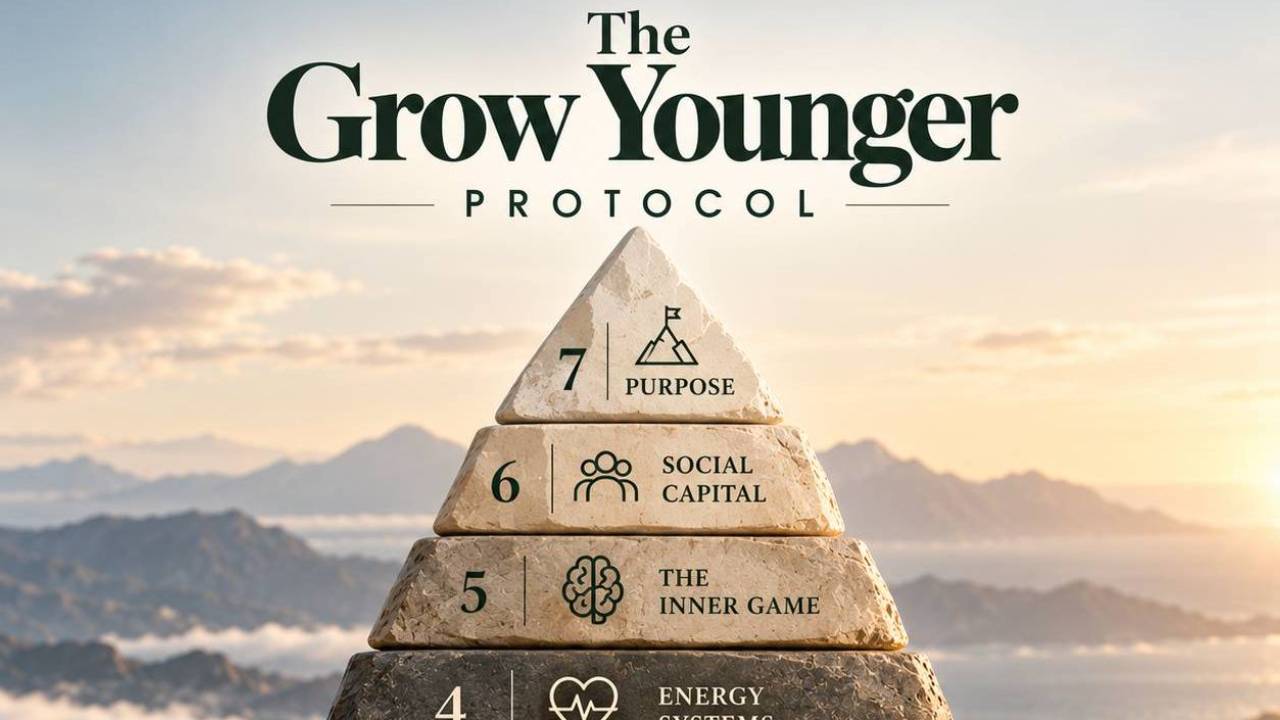
The High Performance Journal Written By Dan Go - October 13th, 2026
I had my first child at 40 and my second child at 43.
I remember when I had them, I did the math, and it didn't look good:
When they're 30, I'll be 70. When they're 40, I'll be 80.
With that info in mind, I set a goal to live to 100. I wanted to extract as many years as I could with them, and I even made videos on how I plan to do it.
For several years, that goal ran my life. I remember taking up to 15 supplements as part of a morning routine that extended to an hour, while my workouts almost felt like a second job. What was worse was that my sleep and recovery scores dictated how I felt, and I even judged people who didn't live the way I did.
Then I started to see the cracks in the facade. It started with one well-known health influencer saying that one bad night of sleep ruined his entire day. Another was calling everyday orange juice toxic to the body. Many of them were driven by a hyper-obsession with their health.
It took some time, but I realized I didn't want to live like that. I didn't just want to be strong and functional. I wanted to be resilient.
This made me realize I'd been asking an incomplete question, "How long can I live?" when the better question is, "How long can I keep living a great life I want with the people I love?"
Most people end up answering the first question in one of two ways, but neither gives the second one much thought.
The 1st mistake: "I don't care about living long. I just want to do whatever I want and live my life"
You've probably heard someone say this in one form or another.
The problem with this statement is ignorance. They don't realize modern medicine has become great at keeping people alive, but not great at keeping people healthy. Research from the Mayo Clinic found that the average American now spends 12 years in poor health and possibly in disability. Medicine stretches those years out, but it doesn't give back what was lost.
I saw both sides of this when I owned my gym. The people who lived the best quality lives as they aged were in the weight room. Outside of it, I watched people spend their final years unable to walk on their own and having to be dependent on their kids for the last years of their lives.
I saw it in my own family. My dad started taking care of his body in his 40s. He still lives on his own, walks on his own, works out, and his brain is working as well as ever. His friends, on the other hand, paint a different story. One of them needs a walker. The other one has to live with their kids. Others are in nursing homes.
Before going further, I need to say that a life with illness or disability is still a life worth living. Also, health problems can come no matter how much we try to avoid them. That said, while we can't control genetics or plain bad luck, a lot of decline is optional.
Yet the fact remains, some people give their cars more oil changes than they do workouts at the gym. Then small capabilities start disappearing, and they blame it on age, but most times it's neglect.
The 2nd Mistake: Chasing numbers
This is the one I know personally. It wasn't until I did a deep dive into what actually made us live longer that I reworked how I approached this area of my life.
In the 1840s, doctors found that hand washing stopped new mothers from dying of infection. Then we discovered vaccines, antibiotics like penicillin, and better treatments for heart disease. We also figured out that smoking is horrible and drinking alcohol regularly is not healthy.
Almost every big jump in lifespan came from discovery and medical innovation. None of them came from 2-hour morning routines or obsession about eating the perfect diet.
The longevity space also has a habit of exaggerating things, whether it be a new supplement or a weird habit that brings down your "biological age". While these sound sexy, a better number on a test hasn't been shown to provide more years. This is because the science isn't there yet.
And the obsession itself is unhealthy, with the highest cost being your mental health. Needing every small thing from your sleep to your diet to be pristine before so you can live at a future age is not a way to live life.
Dan Sullivan writes about this in his book, The Gap and the Gain, where the horizon moves every time you step toward it. Living to 100 was my horizon, and like any goal, I would extend it, and it would keep me from living in the present moment.
So what is the answer? Stop focusing on quantity and start focusing on quality
In short, focus on your healthspan.
I stopped focusing on how long I would live and started focusing on how well I am living.
Healthspan is your quality of life. Specifically, it's the number of years you can keep your strength, energy, mental capacity, and relationships to live the life you want to live.
I was just on the ocean off Maui, getting a little surfing, when I saw this guy who must have been 90 years old on a paddle board, surfing the same waves as I was, and I remember saying to myself, "That's what I want to do."
If I can do this at 90 years old, I'm winning
When I picture myself at 80, I want my kids to say, "Dad is super strong. He moves like he's 20 or 30 years younger." I want to hike and surf, and do simple things like putting my luggage in the top compartment of the airplane on my own and be the grandad that still beats his grandkids in a foot race. Most importantly, I want to be useful.
When you focus on healthspan, it puts you in a position to take advantage of the upcoming technologies that will be invented. The fitter you are when a breakthrough arrives, the better your odds are of living those years fully.
Even if these breakthroughs take longer than promised or don't even show up at all, you still have more life in your years by focusing on what's most important. We can't necessarily rely on future medicine that hasn't been invented yet, and that is why living a better life now becomes the focal point.
Before I add anything to my routine now, I ask 3 questions:
- Does this make my life better now?
- Does it protect what I'll need later?
- Is there real evidence it's worth the cost?
It's one of the reasons I brought plyometrics back into my routine and also why I take the readings from sleep and recovery trackers with a grain of salt.
With those questions in mind, I came up with a protocol called Grow Younger.
The Grow Younger Protocol
This is where most people get this backwards with their health. They put the energy into the small stuff before the big stuff. We saw this with cold plunging, new supplements, and now peptides. Not to say these are worthless, but they only help you improve the margins when the big rocks are what fill the jar.
It's the 20% that drive 80% of your results.
The Grow Younger Protocol exists because that's exactly what it does. It's taken me from being a fat, unhealthy, purposeless high school dropout to helping millions of people across the world while feeling and performing better than I did in my 20s.
I've taken so many clients through this process, and the one thing they tell me is that they have not felt this great since their college days.
Unless you were a professional athlete growing up, you haven't come close to your ceiling. When you build these 7 pillars, you will look, feel, and perform like someone decades younger while watching everyone else around you get older.
Pillar #1 - Metabolic Flexibility
This is the foundation. When your blood sugar, blood pressure, and body fat drift out of range, you won't feel it at first, but left untouched, it shows up later as heart disease, diabetes, stroke, and, in some cases, cancer. Good metabolic health keeps you running at your full potential mentally and physically while helping you avoid preventable diseases.
I created a free guide on how we help our clients improve metabolic health. Grab it here.
Pillar #2 - The Recovery Engine
If you're short on sleep for one day, you'll be fine, but if you're chronically under-slept for weeks or months, everything gets harder and the risk of disease increases. Recovery is where you reap the rewards of the work that you put in. It's also the place where you have enough energy and mental capacity to give fully to your family.
If this is something you need to work on, I created a free guide, which you can grab here.
Pillar #3 - Physical Independence
Strength, mobility, and power decide whether you can live on your own terms or not. They determine whether you can survive falls, put your luggage in the overhead bin, or get up from a seated position. Those 3 are the first things we lose with age, and they are hard to get back, which is why we need to protect them now.
I created a free guide on the strength training protocol we use with our clients, which you can grab here, and links to our protocols for mobility and power are linked above.
Pillar #4 - Energy Systems
Your heart and lungs increase the ceiling of what you're capable of. A strong base of cardio means you can hike, run, and have enough oxygen delivered to your muscles and organs to work at their full potential. We want to maintain this to have the energy and capacity to live a long, quality life.
There are 2 great ways to do this. Talked about in this newsletter here.
Pillar #5 - The Inner Game
A capable body can only get you so far if your mind is working against you. Stress, anxiety, and mood can wear you down as much as bad food or poor sleep. A calm, resilient mind is what lets you enjoy the life your body makes possible.
I haven't necessarily created a guide on the mental management system that I use, but I have created guides for the process of getting lean, which are correlated. You can check it out over here.
Pillar #6 - Social Capital
The people around you have a tremendous impact on your health. Having strong relationships makes the hard times easier and the good times better. Isolating ourselves does the opposite. The friendships you want later have to be built and kept up now.
Pillar #7 - Purpose
We need a reason for waking up. We can't just think that we're going through the motions. In general, we need to feel useful and do things for other people. Without it, it's like steering a boat without a rudder. In my life, I broke it down to one thing early on, when I was just starting: my one purpose in life is to help others. For you, it could be the same, or it could be different, but regardless of whatever it is, make it yours.
Start At The End
Something that has helped me tremendously in life is the concept of starting at the end. Make a list of the things you want to do as you get older and then work backwards.
A great way to approach this is to work on one at a time. Choose the one you're weakest at and give it your full attention for the next 120 days.
Remember that healthspan can turn into its own obsession if you let it, so make sure to leave room for the things you love like wine, dessert, or, in my case, surfing.
When I think about this life that I've created, it's that I started at the end and worked backward from that list on creating my reality. My hope for you after reading this is that you put the focus on the quality of your days, not how many days you have.
Thanks for reading, and see you on the next one.
Onward and upward. 🚀
- Dan
When you're ready, here are 2 ways I can help:
1. The Lean Body 90 System: When you’re ready to get in great shape, Lean Body 90 is the obvious choice. You can get in great shape and reach your fitness goals in just 90 minutes a week. Lose weight and build muscle even without hours in the gym or highly restrictive diets. Join 1000+ students here.
2. Are you an entrepreneur who wants to get lean, boost energy, and get in your best shape? Apply for private one-on-one coaching here.
Disclaimer: This email is provided for educational and informational purposes only and does not constitute providing medical advice or professional services. The information provided should not be used for diagnosing or treating a health problem or disease, and those seeking personal medical advice should consult with a licensed physician.