Dan Go: I Wouldn't Put A Family Member On Ozempic (Unless They Did This)
Feb 10, 2026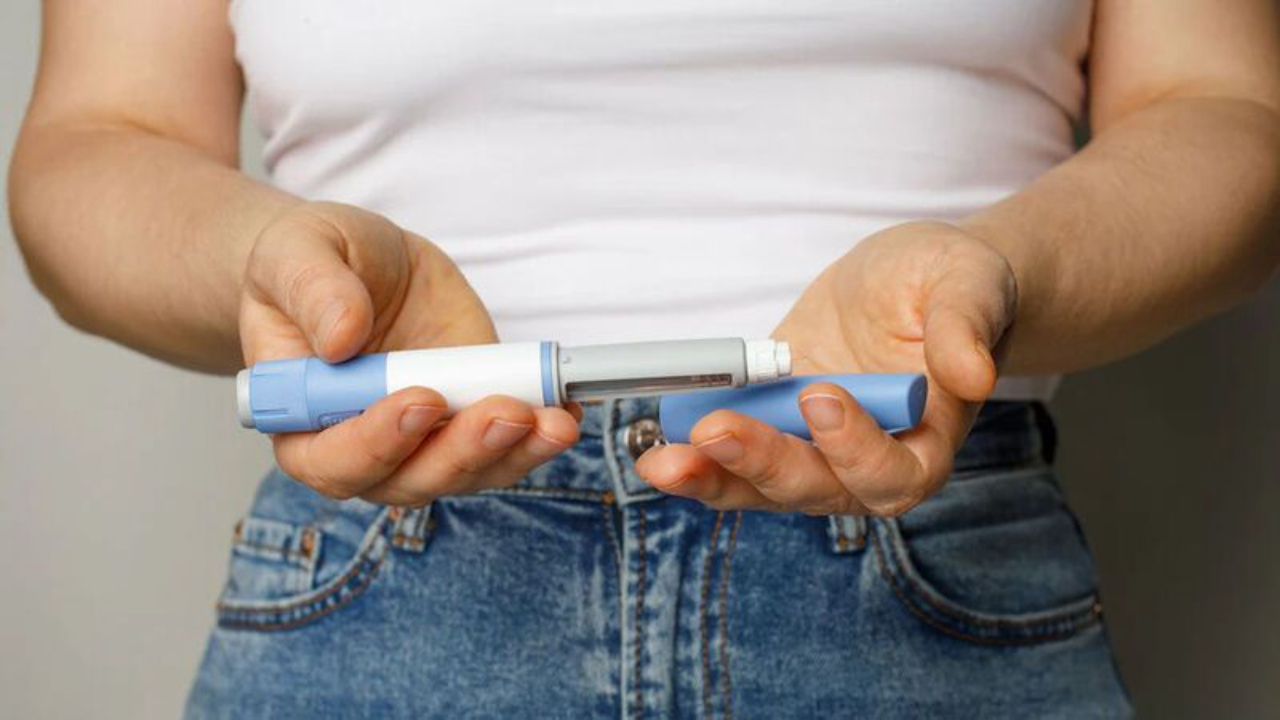
The High Performance Journal Written By Dan Go - February 10th, 2026
A client came to us last year after being on Ozempic for eight months. He'd lost 35 pounds. His doctor was happy. His wife said he looked slim. On paper, everything was working.
Then he stopped taking it.
Within a year, he'd gained back 30 of those pounds. And when we ran a DEXA scan (body fat test), the picture was worse than the scale showed:
He'd lost a significant amount of lean mass while on the drug and never rebuilt it. So the weight he gained back was almost entirely fat.
He was heavier, weaker, and metabolically worse off than before he started.
We're seeing this more and more. People go on a GLP-1, lose weight, come off, and end up worse than where they began. Not because the drug didn't work. But because nobody told them what to do while they were on it.
So I built the High Performance GLP-1 Protocol™. If a family member told me they were going on a GLP-1, this is exactly what I'd tell them to do.
But first...
Note From Dan: A quick note before we dive in. I'm not anti-GLP-1. For people with serious weight loss or metabolic health issues, these drugs can be a real turning point. I've seen it firsthand with our clients. But I've also seen people reach for them as a shortcut when the fundamentals haven't been given a real chance. This newsletter isn't here to judge either group. It's here to make sure that if you're going to put something in your body every week, you know the full picture before you start, and you have a plan to protect yourself while you're on it.
Should You Take A GLP-1?
Here's what I tell our clients: do the fundamentals first.
Most people who come to us thinking they need a GLP-1 have never committed to the basics long enough to see them work.
They've tried diets. They've done short bursts of exercise. But they've never built a real system and stuck with it for a year. And when they do, most of them don't need the drug.
A GLP-1 should not be the first tool you reach for. It should come after the fundamentals have been given a real chance, and you and your doctor have decided you need additional support.
That said, for people with a significant amount of weight to lose or metabolic health issues at play, a GLP-1 can be a legitimate part of the plan. But even if you lose the weight, your lifestyle has to change.
The Benefits And The Hidden Costs
Courtesy of https://www.nejm.org/doi/full/10.1056/NEJMoa2206038
The benefits are real. GLP-1 drugs produce significant weight loss, improvements in cardiovascular health, reductions in visceral fat, and the food noise goes quiet. For people with obesity-related health risks, these drugs can be life-changing.
But there's a cost most people don't find out about until it's too late.
In the STEP 1 trial, roughly 45% of the weight lost on semaglutide wasn't fat. It was lean mass. A University of Utah study found that even when muscle size stayed relatively stable, strength still dropped by 20%.
There are also side effects worth knowing about. The most common are nausea, gastrointestinal issues, and appetite suppression to the point where people struggle to eat enough.
Less common but more serious risks include pancreatitis, gallbladder problems, and potential thyroid concerns. These are things your doctor should be monitoring closely.
I had one client who had to get off of Ozempic because it was making him too nauseous to work. I've seen others deal with severe stomach issues due to the effect it has on the gut.
As with all medications, there is no such thing as a free lunch.
And Then There's The Commitment Most People Don't Expect.
For many people (who don't follow the protocol below), GLP-1s can be a lifetime subscription.
The STEP 1 trial extension found that one year after stopping semaglutide, participants regained two-thirds of the weight they had lost.
A more recent meta-analysis showed that people who stopped semaglutide or tirzepatide regained an average of 10 kg in the first year, with most projected to return to their baseline weight within 18 months.
I know people who get off it only to go back on after they've regained the weight, not realizing this creates a yo-yo cycle of weight loss and weight gain.
It's common sense, too. The appetite comes back, but the metabolism gets wrecked because the muscle is gone. For many, taking GLP-1's are a lifetime subscription.
Now, that's not a reason to avoid them. But it is a reason to go in with your eyes open.
If you're going to start, you should know that either you're committing to the drug long-term, or you're committing to building a lifestyle that can carry you when you come off it.
That's what this protocol is designed to do ↓
The High Performance GLP-1 Protocol
This is the exact protocol we use with our coaching clients on GLP-1s. It gives you a fighting chance of not being on it for the rest of your life.
1. Strength train using the 2S Method. Non-negotiable
Resistance training is the primary driver of lean mass retention during weight loss. If you're on a GLP-1 and not lifting, you are losing muscle that you will never easily get back.
We use the 2S Method: two hard sets per exercise, 6 to 10 reps, close to failure, three days a week. In and out in 30 to 40 minutes. Minimum effective dose. Maximum muscle protection.
2. Set a protein floor and ceiling
We set our clients at 0.7 to 1 gram of protein per pound of body weight. The ceiling is your target on normal appetite days. The floor is your minimum on days when hunger is suppressed hard. Even on those days, hit the floor.
This is where protein shakes can be a benefit because it's easier for some people to stomach a small protein shake than it is to eat a 300g striploin.
Your muscles still need fuel. Protein first at every meal. If you need more help doing that, use this guide.
3. Upgrade your food quality
Being on a GLP-1 is not an excuse to eat like crap. Because you're eating less, every meal matters more. Whole, nutrient-dense foods. Real protein. Vegetables. Healthy fats.
When you start eating real food consistently, your taste buds naturally acclimate.
The processed stuff starts tasting like what it is. That shift in your palate is one of the most underrated benefits of being on a GLP-1. Use a smaller appetite to eat better, not just eat less.
4. Schedule your meals
The food noise is turned down. Use that. This is the perfect window to start scheduling your meals. Set consistent times. Plan in advance. Use the framework I talked about here and build a rhythm.
When we set this up with clients, it becomes one of the habits that sticks the longest. You're automating your hunger instead of fighting it. And once it becomes routine, it carries over to life after the drug.
5. Track body composition, not just weight
This is possible with the right guidance and systems.
The scale doesn't tell you what you lost. You could lose 30 pounds and end up with the same body fat percentage because you lost muscle along with the fat. That's not a transformation. That's a downgrade.
Ideally, you want to build and keep muscle while losing the fat (see image).
Track your muscle mass. Your visceral fat. Your metabolic health markers. Those are the numbers that matter.
6. Supplement for nutrient deficiencies
When someone is eating less, it can lead to nutrient deficiencies. No bueno.
We would recommend supplementing with Omega-3s, Vitamin D3+k2, creatine, and even a multivitamin to ensure we're getting the nutrients needed to support our physical and mental health.
7. Evolve your identity
So you followed the protocol, and you lost the weight. Along the way, you must become the person who feels comfortable at the new weight. It's not enough to set a goal, you must become it.
This means new beliefs, behaviors, and new ways of operating. I'll be coming out with a newsletter on how we do this with clients in a future HPF.
It's not enough to set a goal of losing weight. You must become the goal.
The Drug Is A Window. Your Lifestyle Is The Plan.
A GLP-1 can suppress your appetite and give you breathing room to change. But it can't change you.
The ones who treat it as a window to build a new lifestyle come out stronger, leaner, and metabolically healthier. The ones who treat it like a magic pill end up right back where they started.
Use the window. Build the system. Give yourself a fighting chance.
Onward and upward. 🚀
- Dan
When you're ready, here are 2 ways I can help:
1. The Lean Body 90 System: When you’re ready to get in great shape, Lean Body 90 is the obvious choice. You can get in great shape and reach your fitness goals in just 90 minutes a week. Lose weight and build muscle even without hours in the gym or highly restrictive diets. Join 1000+ students here.
2. Are you an entrepreneur who wants to get lean, boost energy, and get in your best shape? Apply for private one-on-one coaching here.
References
- Wilding JPH, Batterham RL, et al. "Impact of Semaglutide on Body Composition in Adults With Overweight or Obesity: Exploratory Analysis of the STEP 1 Study." Published in the Journal of the Endocrine Society, 2021. (PMC8089287)
- West S, Scragg J, Aveyard P, Oke JL, Willis L, Haffner SJP, Knight H, Wang D, Morrow S, Heath L, Jebb SA, Koutoukidis DA. PubMed "Weight regain following the cessation of medication for weight management: a systematic review and meta-analysis." BMJ. 2026;392:e085304. Published January 7, 2026.
- Karasawa T, Choi RH, Meza CA, et al. "Unexpected effects of semaglutide on skeletal muscle mass and force-generating capacity in mice." Cell Metabolism. 2025;37(8):1619-1620.
- Wilding JPH, Batterham RL, Davies M, et al. "Weight regain and cardiometabolic effects after withdrawal of semaglutide: The STEP 1 trial extension." Diabetes, Obesity, and Metabolism. 2022;24(8):1553-1564.
Disclaimer: This email is provided for educational and informational purposes only and does not constitute providing medical advice or professional services. The information provided should not be used for diagnosing or treating a health problem or disease, and those seeking personal medical advice should consult with a licensed physician.